The PCOS Clarity Method

You don't have PCOS symptoms. You have five different problems that all live in the same body — and nobody has ever explained why.

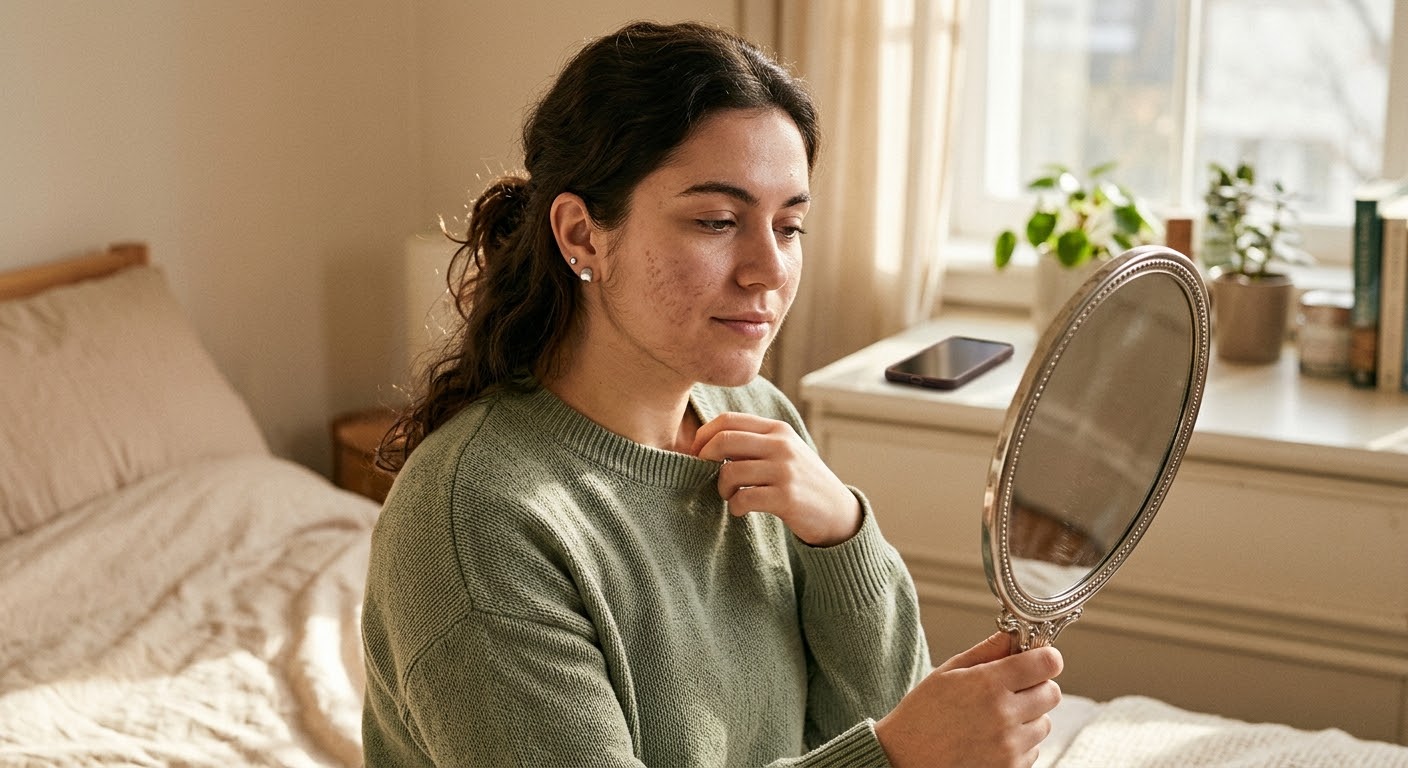
Young woman examining her skin in a hand mirror

You wake up and check your face in the mirror before you check your phone. Not out of vanity — out of habit. You're looking for the new spot along your jawline, the one that showed up overnight even though you haven't eaten anything "bad" this week.

You open your period tracker app, even though you already know what it's going to tell you. It's been 42 days. Or 51. Or it came twice last month and you don't know why. The app just shows a red exclamation mark and no explanation.

You get dressed and there's that quiet moment — the one where you avoid a certain pair of jeans, not because you "let yourself go," but because your body has been changing in ways that don't match what you eat or how hard you train.

You've tried to explain this to people. Your mother says it's stress. Your friend says try a detox tea. The girl on TikTok says cut all carbs. The pharmacist recommends a supplement. Somebody's aunty swears by a soup. Everyone has an opinion. Nobody has the full picture.

So you keep buying — the acne cream for your face, the tea for your cycle, the "hormone balance" capsules for your mood, the diet plan for your weight, the workout challenge you saw on Instagram — and three months later you're exactly where you started, except your bank account is lighter and you're starting to believe this is just who you are now.

It isn't. And there's a reason every one of those separate fixes has failed you.

Here's what nobody told you

Your symptoms aren't separate problems. They're one connected pattern.

The irregular periods, the acne, the stubborn weight around your middle, the unwanted hair, the sugar cravings at 9pm, the exhaustion that sleep doesn't fix — in many women, these all trace back to the same thing happening quietly in the background: a hormonal and metabolic pattern that affects how your body responds to insulin, how it produces and clears certain hormones, and how it regulates your monthly cycle.

This is why treating each symptom on its own so often fails. The acne cream works on your skin, but it can't touch what's happening with your insulin. The tea might soothe your stomach, but it doesn't change the signal your ovaries are getting. The diet cuts calories, but if it isn't built around how your specific body processes food, your weight barely moves — or comes right back.

It's like five warning lights coming on your car dashboard, all wired to the same engine problem, and you've been individually taping over each light instead of ever opening the bonnet.

To be clear — having a few of these symptoms doesn't automatically mean you have PCOS, and this isn't a diagnosis. Lots of things can cause irregular cycles or skin changes. But if several of these symptoms are showing up together, and you've never been shown how they connect, that's the gap this method was built to close — the gap between "something is wrong" and "I finally understand what to do next."

The full story

I didn't set out to build a health product.
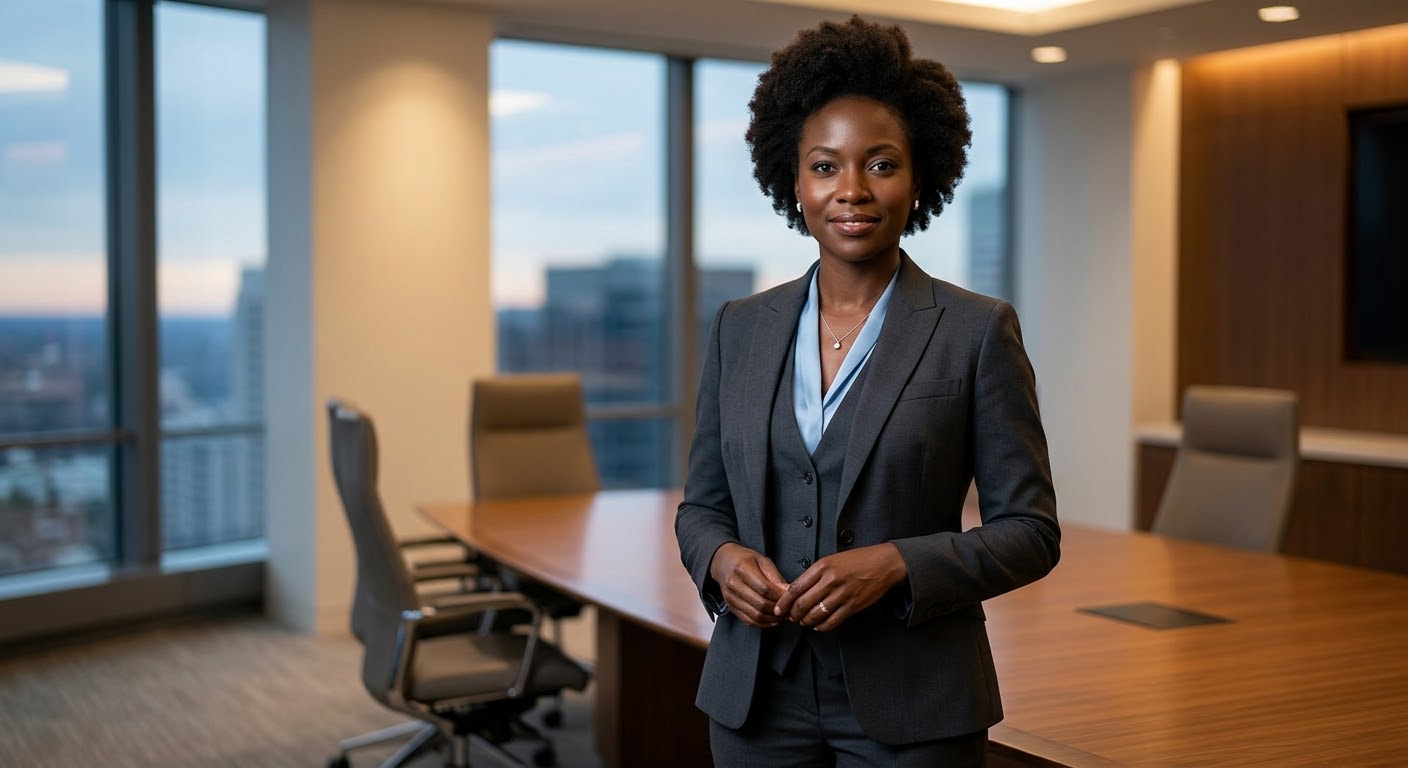
Amara, founder of The PCOS Clarity Method

I set out to understand why the women around me were suffering in silence over things nobody would say out loud.

I grew up between Enugu and Lagos, the kind of childhood where "women's issues" were spoken about in whispers, if at all. My cousin Ngozi used to disappear into her room for two days every few months, curled up with a hot water bottle, missing school, and the family explanation was always the same: "it's just her period, it will pass." Nobody asked why hers looked so different from everyone else's.

I watched a close friend, Feyi, spend almost four years trying to understand her own body. She was smart — the kind of woman who read every article, followed every account, asked every question — and still, by her mid-twenties, she felt like she knew less about her own cycle than she had at eighteen.

It started small for her. A missed period here and there in university, which everyone chalked up to "stress from exams." Then it became a pattern — three months without a period, followed by one that lasted two weeks. Acne that showed up along her jaw and chin in her mid-twenties, long after her teenage years were supposed to be over. Weight that crept on steadily despite her eating roughly the same way she always had. Dark, coarse hair along her chin that she started shaving in secret, embarrassed to even say the word "hirsutism" out loud.

She went to a doctor in Lagos who ran a quick scan, said the word "PCOS" almost in passing, handed her a prescription for birth control pills "to regulate things," and moved on to the next patient in a packed waiting room. Ten minutes, no explanation of what PCOS actually was, no discussion of food, sleep, stress, or what any of it meant for her long-term health or her fertility. Just a prescription and a door closing behind her.

I remember sitting with her in a café in Ikeja, watching her cry — not because of the diagnosis itself, but because of how alone she felt holding it. "Amara," she said, "I have a name for what's wrong with me now, and somehow I understand it less than before."

That sentence stayed with me for years.
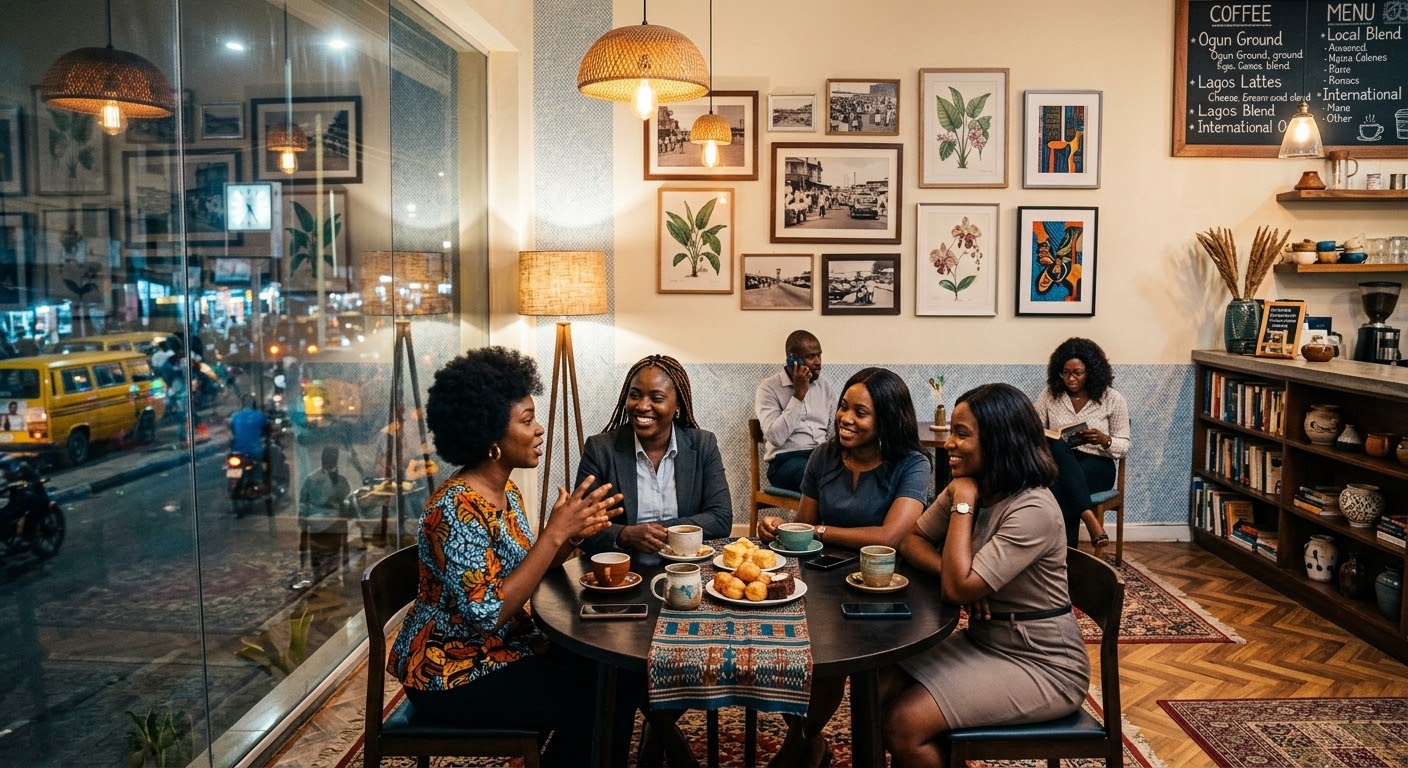
Amara and Feyi talking over coffee

What followed for Feyi was the same pattern I'd go on to hear from woman after woman, in different cities, different backgrounds, same story:

She tried the acne route first. Expensive facial cleansers, a dermatologist-recommended cream, then a dermatologist-recommended antibiotic. Her skin improved slightly for two months, then the breakouts came back harder, because nothing had touched what was actually driving them.

She tried the tea and supplement route. A "hormone balance" tea a colleague swore by, then a cinnamon supplement from a wellness page on Instagram, then an inositol supplement she bought after seeing three different TikToks about it in one week — with no idea of dosage, no idea if it was even right for her, just hope that this would be the one that worked.

She tried the diet route. A no-carb plan for six weeks that left her dizzy at work and irritable at home, which she abandoned after a wedding weekend "ruined it," followed by a strict calorie-counting app that made her afraid of rice, a food she'd eaten her entire life without issue.

She tried the fitness route. A punishing 5am gym routine she found from a fitness influencer, five days a week, that left her more exhausted, with her cycle becoming even more irregular under the stress — something she didn't understand at the time, and neither did the influencer whose plan she'd followed.

She tried the birth control route her doctor had prescribed, which did regulate her bleeding — but the moment she came off it two years later to try for a baby, all the original symptoms returned exactly as they'd been, because the underlying pattern had never actually been addressed. It had just been paused.

By the end of it, Feyi had spent more money than she wanted to admit, across five completely different "solutions," and she was no closer to understanding her own body than the day she got her diagnosis. What broke my heart wasn't any single failure — it was watching an intelligent, resourceful woman get failed by a system that kept treating her like five separate problems instead of one connected person.

That was my turning point. Not a research paper. Not a mentor. A friend, crying in a café, holding a diagnosis she didn't understand.

I started digging — reading what I could find on PCOS from credible sources, sitting in on conversations with nutritionists and health educators, comparing what Feyi and other women were experiencing against what the actual condition involved. And the thing that became obvious very quickly was this: the information women needed to make sense of their own bodies already existed. It just wasn't organized anywhere in a way an ordinary woman — working a full day, feeding her family, living her life — could actually use.

Everything was either a fifty-page medical paper written for clinicians, or a five-minute TikTok that oversimplified everything into a miracle cure. There was no middle ground. No plain-language explanation of what PCOS is and isn't. No simple way to track your own symptoms and start seeing your own patterns. No lifestyle guidance that was actually built around food we eat here — beans and plantain and rice, not quinoa and almond milk. And no honest guide for how to walk into a doctor's appointment and actually be heard.

So I built the thing I wished Feyi had been handed on the day of her diagnosis. Not a miracle cure — I want to be completely honest about that, because anyone who promises to cure PCOS with a PDF is lying to you. What I built was a system for turning confusion into clarity: understanding your symptoms, tracking your patterns over time, adjusting your lifestyle in realistic, sustainable ways, and walking into your next doctor's appointment as an informed woman instead of a confused one.

That system became The PCOS Clarity Method.
What changes, and when

A realistic timeline of clarity and control

This isn't a product that promises your hormones will be "fixed" in three weeks — anyone who tells you that is selling you a fantasy. Here's what the process actually looks like.

Day 1

The fog starts to lift

You go through Module 1 and, for the first time, read a plain-language explanation of what PCOS actually is, what it isn't, and why your symptoms don't have to look like anyone else's.

Day 5

You start seeing your own patterns

After a few days using the Symptom Clarity Assessment and the daily tracker, you notice connections you'd never written down before — how your cravings shift before your period, how your skin reacts after poor sleep.

Day 7

Food stops feeling like the enemy

You've gone through the Nigerian PCOS Food Guide and Module 4, and "eating well" now means real meals you actually eat — beans, fish, plantain, soups — not a restrictive plan copied from somewhere that's never heard of amala.

Day 12

Movement becomes sustainable, not punishing

Using the Movement Without Punishment framework, you've replaced all-or-nothing gym guilt with a simple weekly rhythm you can actually keep up.

Day 21

You have language for your own body

Your tracker now holds three full weeks of real data. You've worked through the Doctor Conversation Guide and prepared your own cycle history and symptom summary — ready to walk into your next appointment prepared, not guessing.

What women are saying

Real women, real clarity

★★★★★
Blessing — Port Harcourt · 2 weeks ago

"Honestly, I had tried almost everything before I found this. The tracker helped me notice patterns I'd never picked up on before, like how my skin reacts a few days before my period starts. The doctor conversation guide was the real turning point for me."

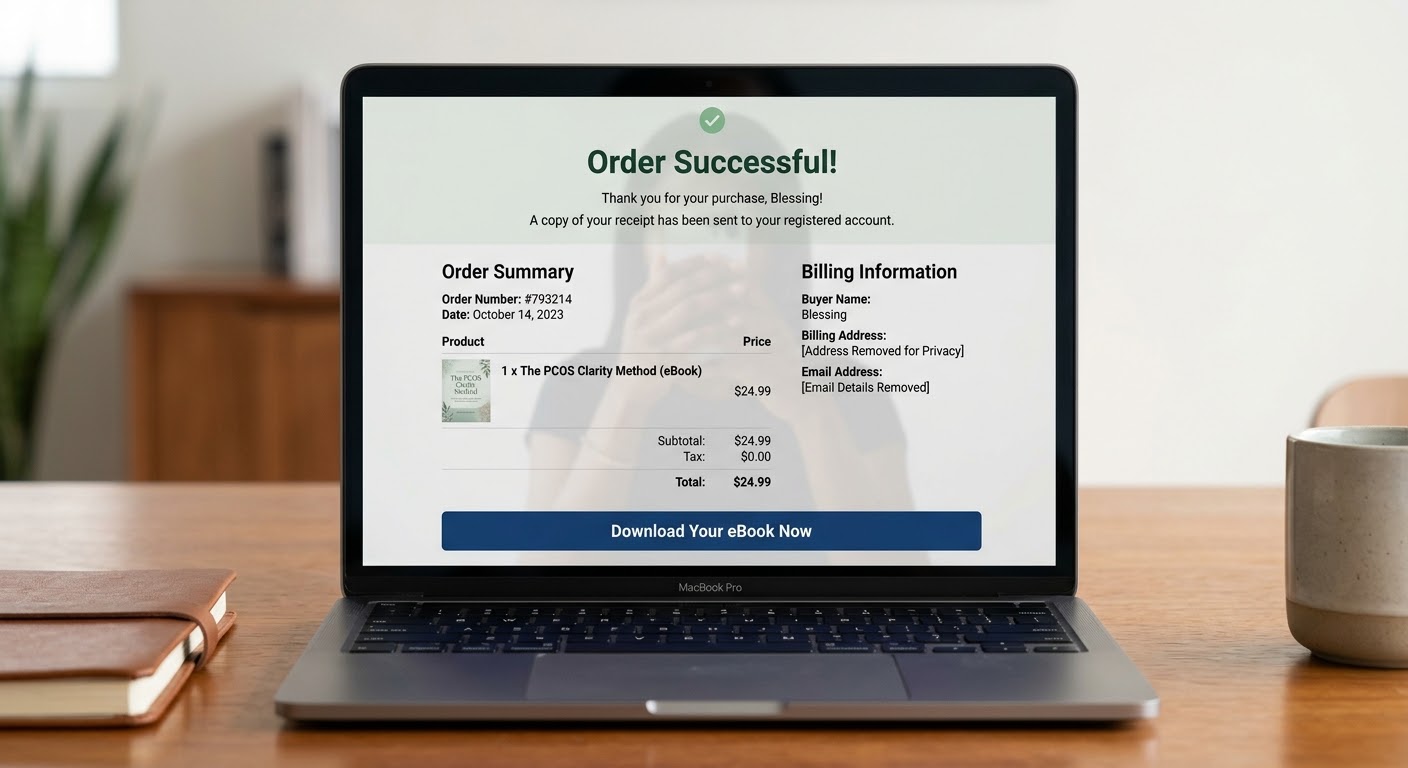
Buyer order confirmation screenshot
★★★★★
Chiamaka — Abuja · 5 days ago

"The food guide is the real MVP for me. I was scared of rice and beans for months because of a diet plan I downloaded online. Now I actually understand that it's about balance, not cutting out everything I've eaten my whole life."

★★★★★
Halima — Kano · 3 weeks ago

"I won't say this cured my PCOS, because that wouldn't be true. But for the first time, I feel like I have some control. I can track my symptoms and I actually understand what's happening in my own body, little by little."

★★★★★
Ijeoma — Lagos · 1 month ago

"My doctor's appointment completely changed after I used the conversation guide. I walked in with my full cycle history written down, and she actually commented that I was the most prepared patient she'd seen in a while."

Buyer order confirmation screenshot
★★★★★
Zainab — Ibadan · 6 days ago

"The movement module is what got me. I used to punish myself at the gym with no results, just exhaustion. This showed me that small, consistent activity can do more than a 6am routine I could never sustain."

Introducing

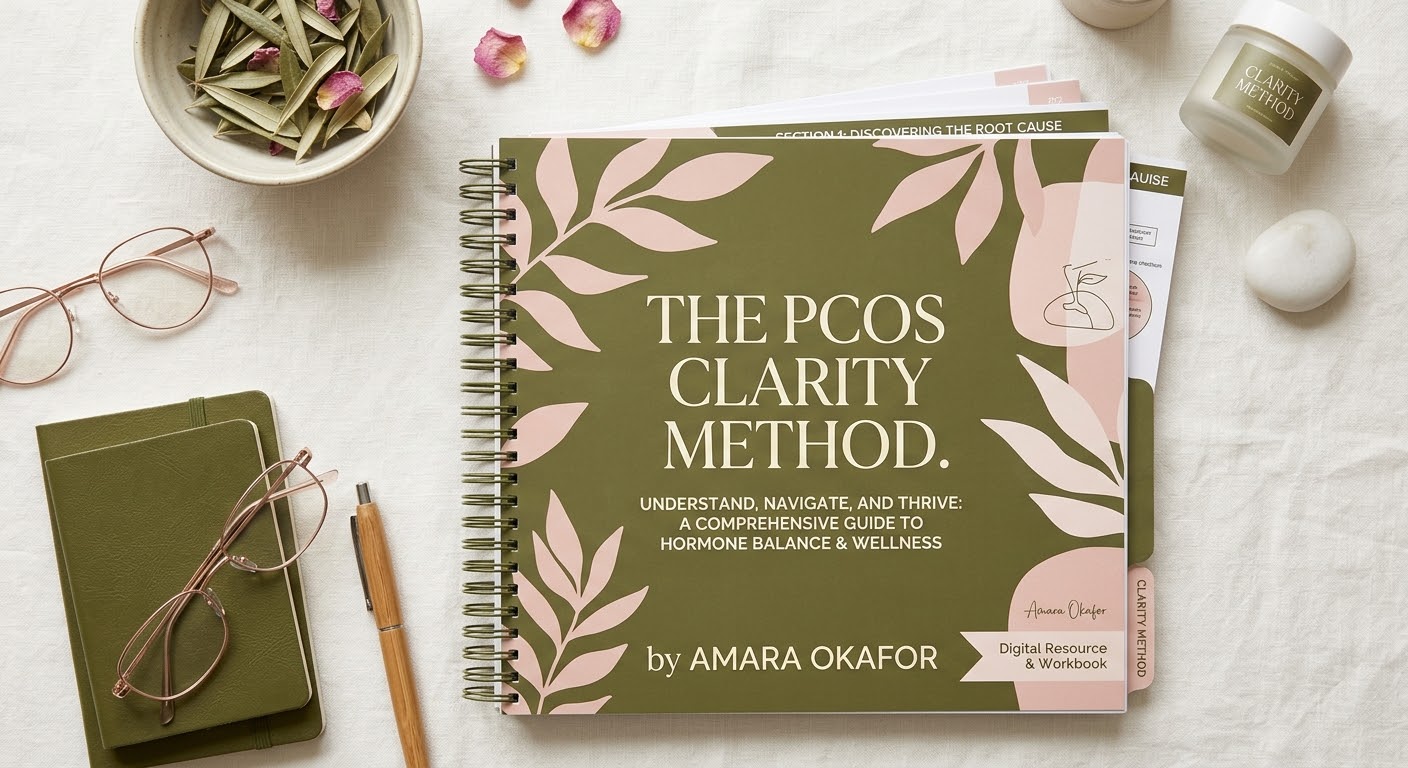
The PCOS Clarity Method

A complete, plain-language guide built to take you from confusion to clarity — understanding your symptoms, tracking your patterns, adjusting your lifestyle in realistic ways, and preparing for informed conversations with a healthcare provider.

Flat lay of The PCOS Clarity Method ebook and tracker
1
Pages 6–17

"Could This Be PCOS?"

What PCOS is, common symptoms, why symptoms look different woman to woman, what PCOS is not, and when professional evaluation matters.

2
Pages 18–27

The Symptom Clarity Assessment

A guided self-assessment across menstrual patterns, acne, hair growth, weight, sleep, energy, mood, eating, and activity — built to help you organize what you're experiencing, not diagnose you.

3
Pages 28–59

The 30-Day PCOS Tracker

Daily tracking pages for your cycle, symptoms, meals, movement, sleep, energy, cravings, mood, and water intake.

4
Pages 60–71

The PCOS-Friendly Lifestyle Framework

Practical, non-extreme guidance on balanced meals, protein, fibre, movement, strength training, sleep, stress, and consistency over restriction.

5
Pages 72–83

The Nigerian PCOS Food Guide

Real food, real markets — beans, eggs, fish, chicken, vegetables, oats, rice, yam, sweet potato, plantain, Nigerian soups, and fruit — built around "eat more of" and "enjoy in moderation," never a fear-based forbidden list.

6
Pages 84–91

Movement Without Punishment

A simple weekly framework of walking, resistance training, cardio, and rest — designed for real life, not gym-guilt.

7
Pages 92–103

The Doctor Conversation Guide

Questions to ask, symptoms to document, a cycle history template, medication/supplement list, family history prompts, and an appointment checklist.

8
Pages 104–109

The "What Now?" Roadmap

A simple decision path: Symptoms → Track → Review Patterns → Lifestyle Support → Professional Evaluation → Follow-Up.

Your free bonuses

Two tools you'll use every day

Value: ₦8,000 — Yours free

Bonus 1: The Nigerian PCOS Meal Builder

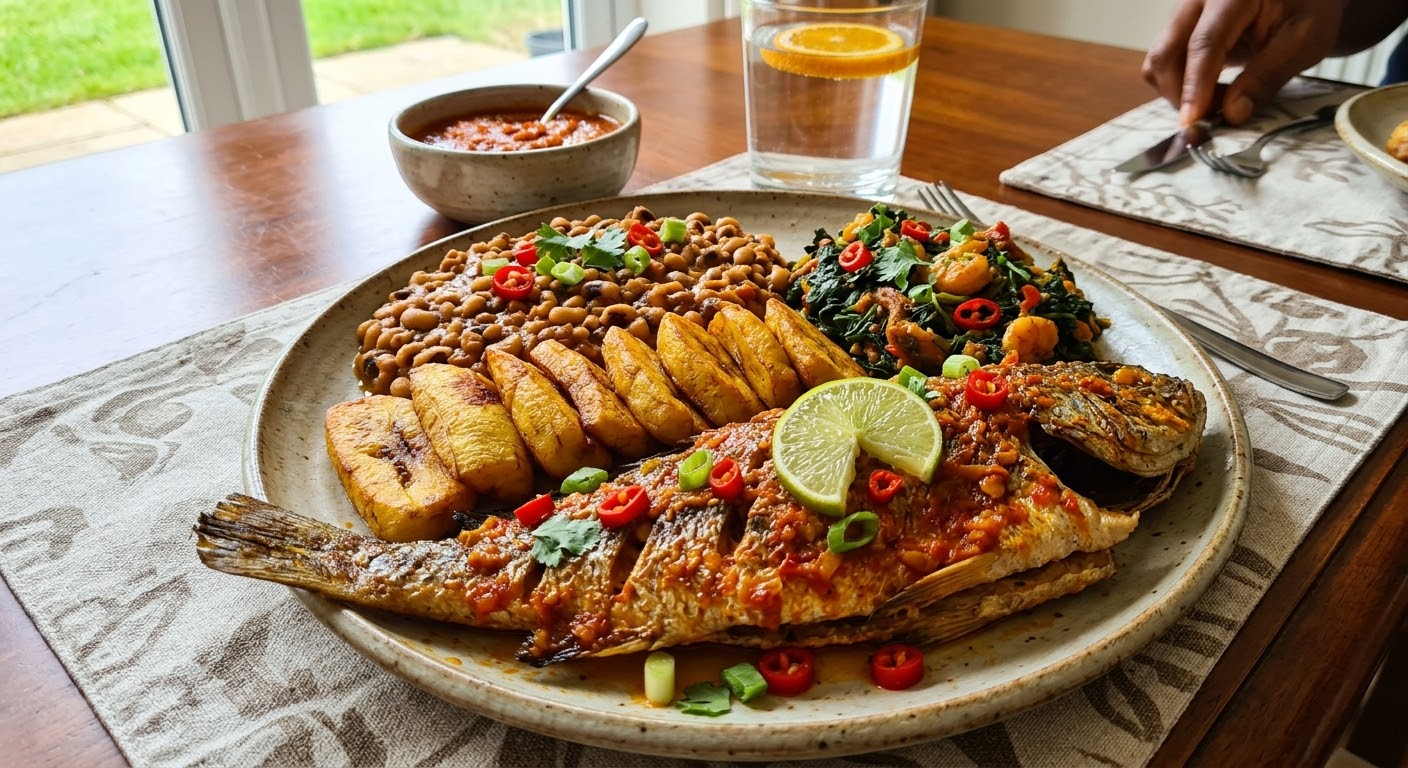
A practical, no-nonsense companion to Module 5 — Nigerian breakfast, lunch, and dinner combinations, snack ideas, protein and fibre sources, portion guidance, simple meal pairings, and a ready-to-use shopping list. This bonus removes the guesswork of knowing what to actually put on your plate on a Tuesday morning in Lagos or Kano — never a miracle "PCOS diet," just balanced eating you can sustain.

Plated Nigerian PCOS-friendly meal — fish, beans, plantain, greens
Value: ₦7,000 — Yours free

Bonus 2: The 30-Day Hormone & Cycle Tracker

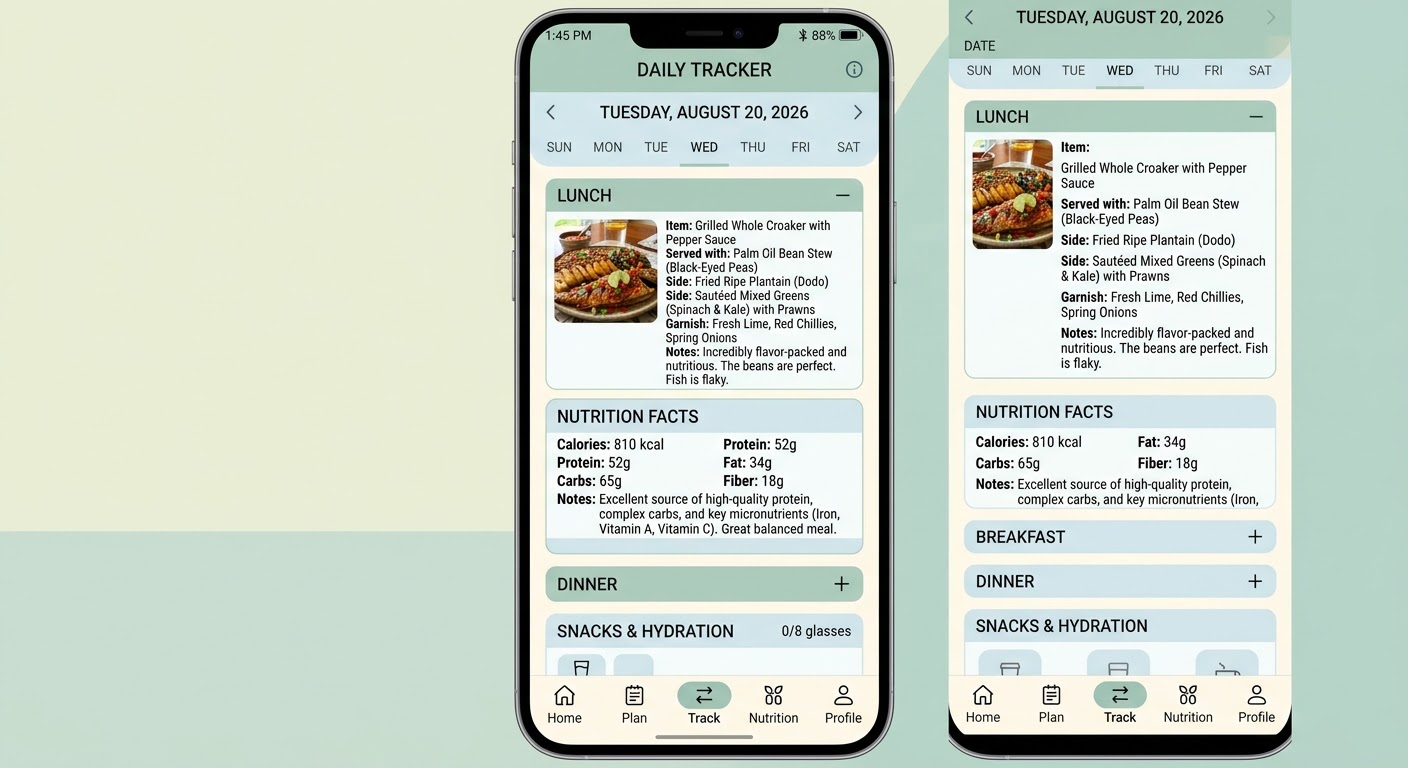
A dedicated printable tracker covering your period, symptoms, acne, cravings, energy, sleep, movement, meals, mood, and space to prepare notes for your next healthcare appointment. This is the tool that turns everything you're learning into daily habit — by day 30 you have a real record of your own patterns, something most women have never had before.

Filled-in daily tracker on phone screens
The offer

Everything you get today

The PCOS Clarity Method (8 Modules)₦25,000
Bonus 1: The Nigerian PCOS Meal Builder₦8,000
Bonus 2: The 30-Day Hormone & Cycle Tracker₦7,000
Total value₦40,000
₦40,000 ₦5,500

One-time payment · Instant download

YES, I WANT THE PCOS CLARITY METHOD

Our guarantee

We built this to actually work when it's used the way it's designed to be used — not skimmed once and left on your phone.

If you go through the full 30-Day Tracker, follow the Nigerian Food Guide and meal suggestions consistently, and you don't see real change in your symptoms and patterns, we'll refund you in full. No stress, no interrogation — just show us you tracked it, and we'll make it right.

₦5,500 is an introductory price for early buyers. Once we hit our first [20] copies, it goes back up to ₦40,000.